


PP woven bags laminated with non-woven fabric represent a next-generation packaging structure that meets both technical performance requirements and circular economy expectations.
This is not just an improvement in packaging structure—it is a step forward toward fully recyclable industrial packaging for the future ♻️
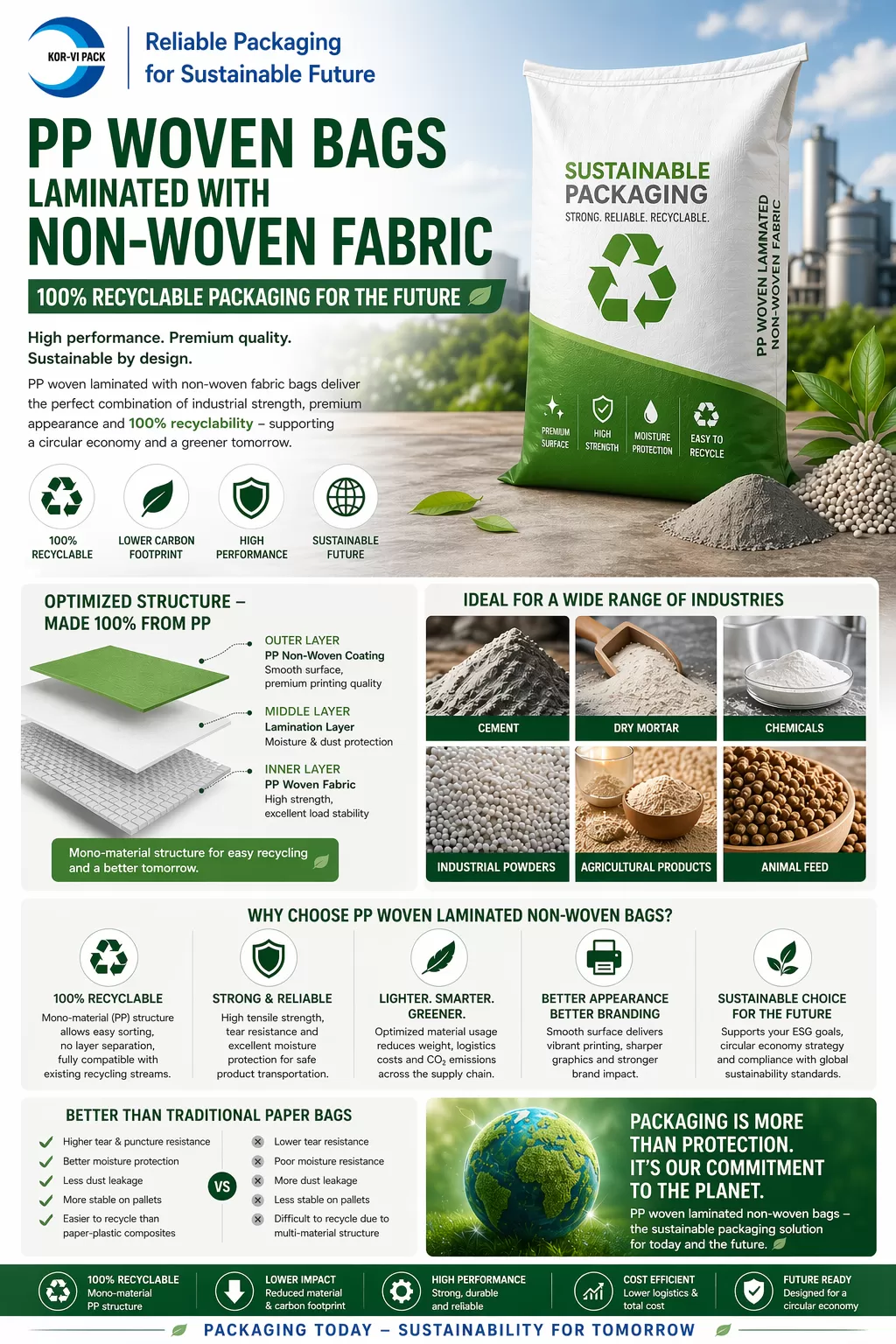
Optimized Material Structure for Performance and Recyclability
PP woven laminated non-woven bags are designed with a mono-material structure:
Outer layer: PP non-woven coating – premium appearance with a soft surface
Middle layer: lamination layer – moisture and dust protection
Inner layer: PP woven fabric – high tensile strength and load stability
Because the entire structure is based on polypropylene (PP), the bag offers:
- full recyclability
- easy sorting in recycling streams
- reduced post-use treatment costs
- compatibility with EU sustainability packaging standards
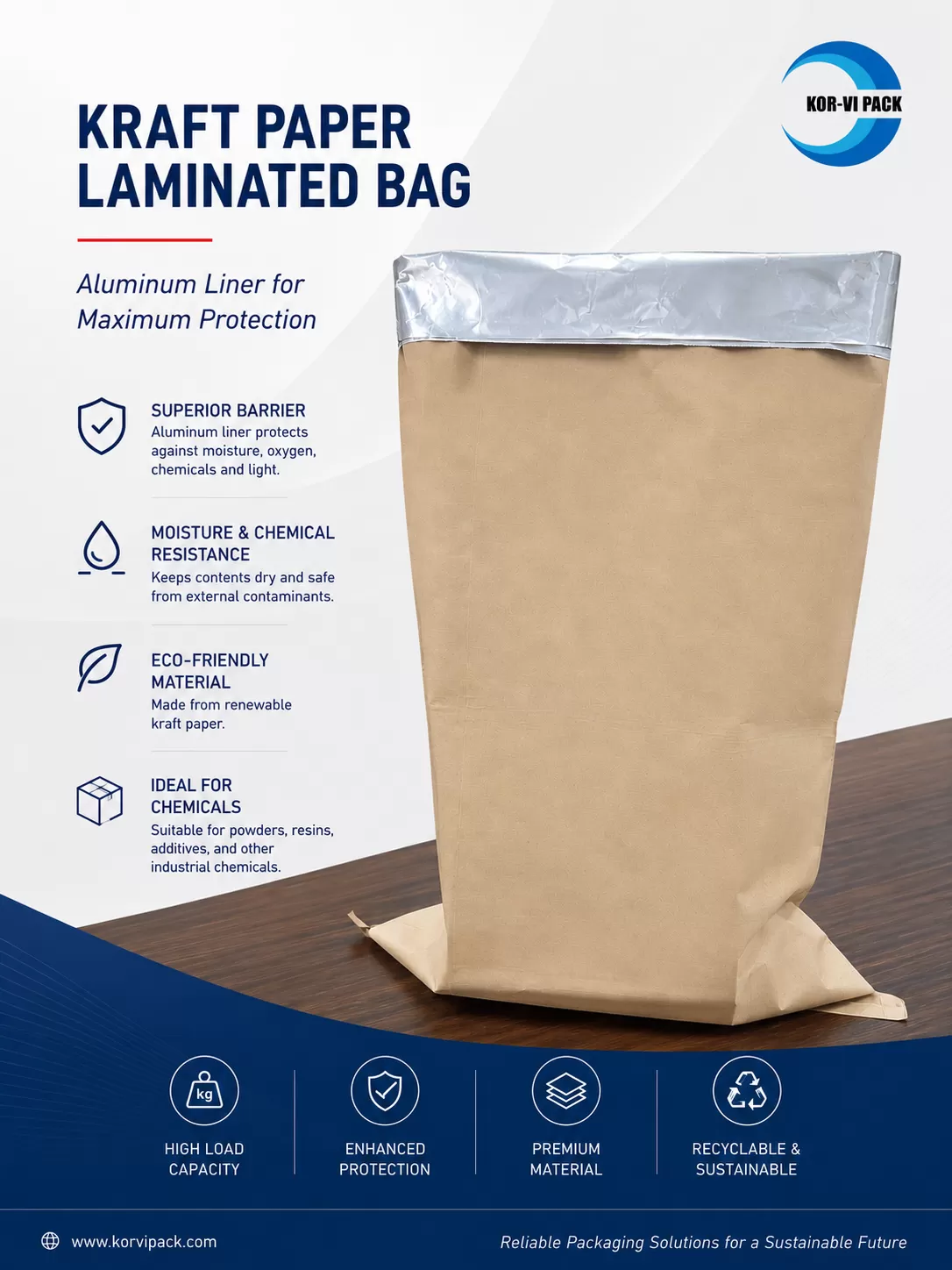
This provides a clear advantage compared with multi-material structures such as paper + PE + woven PP, which are difficult to separate during recycling.
Why This Is a Future-Ready Packaging Solution
1. 100% Mono-Material Structure for Easy Recycling
Global packaging trends are shifting toward mono-material design, and this structure fully supports that direction:
✔ No layer separation required
✔ No complex recycling processes
✔ Compatible with existing recycling systems
✔ Supports corporate Net-Zero targets
2. Industrial Strength Combined with Premium Appearance
Compared with conventional paper bags or standard woven PP bags, this structure offers:
- smoother surface texture
- sharper printing quality
- improved tear resistance
- stronger moisture protection
- better pallet stability during stacking
This makes it especially suitable for:
- cement
- dry mortar
- construction powders
- industrial chemicals
- processed agricultural products
- animal feed
3. Reduced Material Weight and Lower Carbon Footprint
With an optimized laminated structure, these bags can:
- reduce total material consumption
- maintain high mechanical strength
- lower logistics costs
- reduce supply-chain carbon footprint 🌍
These advantages are increasingly important for suppliers serving European markets.
4. A Strong Alternative to Traditional Paper Bags
PP woven laminated non-woven bags provide:
✔ higher tear resistance than paper bags
✔ better moisture protection
✔ reduced dust leakage
✔ improved pallet stability
✔ easier recyclability than paper-plastic composite structures
As a result, many industries are transitioning to this structure as a long-term sustainable packaging solution.
Supporting Circular Economy Packaging Strategies
Leading global brands are prioritizing packaging that meets the following criteria:
- recyclable design
- reduced plastic usage
- mono-material structure
- responsible production
- supply-chain sustainability compliance
PP woven laminated non-woven bags meet all of these requirements, making them an ideal solution for companies moving toward circular packaging systems.
Moving Toward the Next Generation of Industrial Packaging
Today, packaging is no longer just about product protection. It also reflects:
- environmental responsibility
- supply-chain capability
- sustainability strategy
- brand positioning
PP woven laminated non-woven bags represent a practical and forward-looking solution—helping businesses transition to fully recyclable, high-performance packaging designed for the future.
Contact us for more eco-friendly packaging solution.